Skip to content

When you want to remove or prune a protected tree, or build near one, council will want evidence to support your request. Many homeowners wonder whether a few photos and a written explanation will do, or whether they need to pay for a formal arborist report.
The answer depends on the type of application, the tree and your council’s requirements. This guide explains when a DIY assessment may be enough, when councils expect a professional report and why the right evidence can make the process faster.
Key Takeaways
Keep these points in mind before you lodge a tree application.
- Simple applications for small or obviously dead trees may only need photos and basic information
- Development applications involving trees usually require a report from a qualified consulting arborist
- Many councils expect consulting arborists to hold an AQF Level 5 qualification
- A professional report can reduce delays caused by requests for more information
- Reports are also valuable for insurance claims and neighbour disputes
Why Councils Ask for Evidence
Councils protect trees because of their value to the environment, local character and community wellbeing. Under Chapter 2 of the State Environmental Planning Policy (Biodiversity and Conservation) 2021, councils can require permits for clearing protected trees and vegetation in urban areas.
To decide whether work should be approved, council needs reliable information about the tree’s condition, risks and the reasons for the request. The NSW Government summarises this framework in its guidance on vegetation in non rural areas.
What a DIY Assessment Involves
A DIY assessment usually means you gather information yourself and submit it with your application. It can be suitable for straightforward requests.
- Clear photos of the whole tree, the trunk and any damage
- The tree’s location on your property
- Approximate height and trunk size
- A description of the problem, such as dead branches or damage to structures
Some councils accept this kind of information for minor applications, such as removing a clearly dead tree or a species that sits just above the exemption threshold.
The Limits of a DIY Assessment
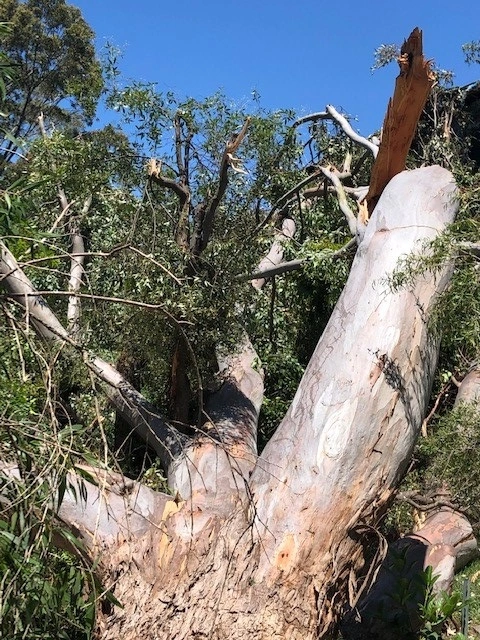
Homeowners usually do not have the training to identify internal decay, root problems or structural defects. If your evidence is unclear, council may ask for more information or refuse the application.
When Councils Require an Arborist Report
For many types of applications, councils expect a professional report from a qualified consulting arborist. Common situations include:
- Development applications where trees are on or near the site
- Removal of large or significant trees
- Trees in heritage areas or on heritage listed properties
- Applications based on structural defects or risk
- Work near bushland or environmentally sensitive areas
The NSW Government’s guide to the DA process explains how development applications are prepared, and supporting documents such as arborist reports are often part of that package.
Qualifications Councils Look For
Many Sydney councils specify that reports must be prepared by an arborist with an AQF Level 5 qualification in arboriculture. Check your council’s requirements before you commission a report, so the author meets the standard.
What a Professional Arborist Report Includes
A professional report gives council clear, structured information to support its decision. Most reports include the following.
- Tree species, dimensions and location
- Health and structural condition
- Identified defects and risk factors
- Discussion of options, including retention, pruning or removal
- Recommendations and supporting reasons
- Tree protection measures where construction is involved
- The author’s qualifications and assessment method
Tree Protection on Development Sites
For development applications, reports often identify tree protection zones and recommend measures such as fencing and suitable construction methods. These measures are commonly based on the Australian Standard for protecting trees on development sites, AS 4970.
Reports for Disputes and Insurance
Arborist reports are not only for council. They are also valuable when you need an independent, professional opinion for other parties.
In New South Wales, certain disputes between neighbours about trees can be heard by the Land and Environment Court under the Trees (Disputes Between Neighbours) Act 2006. The court publishes tree dispute principles that guide its decisions, and professional evidence about the tree is often central to these matters.
The Cost of Getting It Wrong
Submitting weak evidence can lead to delays, refusals and the need to reapply. For development projects, that can hold up builders, designers and finance.
Carrying out work without approval is even more costly. Northern Beaches Council warns that illegal tree works can attract fines of up to $1.1 million, and other councils also take unapproved tree work seriously.
Choosing the Right Option for Your Situation
If your tree is small, clearly dead or close to the exemption threshold, a DIY application may be enough. Check your council’s website and guidelines first.
If your application involves development, a large or significant tree, or a disputed risk, a professional report is usually the safer choice. It reduces the chance of delays and gives council the information it needs to make a decision.
Tips for a Smoother Application
Whichever option you choose, a well prepared application is more likely to be assessed quickly. Councils appreciate clear, complete information.
- Check your council’s tree rules and lodgement requirements first
- Provide clear photos from several angles
- Mark the tree’s location on a simple site plan
- Explain the reasons for the request in plain language
- Include any professional report or supporting evidence
Taking these steps can reduce requests for more information and help your application move forward sooner.
How Forest Tree Service Can Help
Our AQF Level 5 arborists prepare arborist reports for development applications, tree removal requests, insurance claims and neighbour matters across Sydney. Each report is tailored to its purpose and written in clear, practical language.
Once approval is granted, our crew can carry out the recommended work, including tree removal and pruning and site and land clearing for development projects.
Get a Council Ready Report from a Qualified Arborist
Not sure whether your application needs a professional report? Our team can review your situation, explain what your council is likely to expect and prepare a report if one is needed.
Contact us or call 02 9451 9057 to speak with a qualified arborist at Forest Tree Service.